
 Sep 30,2026
Setting up a plastic thermoforming line involves more than selecting a machine. Factory layout, power capacity, cooling water, compressed air, and installation planning determine how quickly production can start and how reliably the line runs afterward. This guide covers equipment scope, space planning, utility requirements, installation steps, and a practical checklist to help buyers confirm site readiness before the machine arrives.
A complete plastic thermoforming production line typically includes more than the main forming machine. Depending on the final product—cups, bowls, trays, lunch boxes, lids, or egg cartons—the line may consist of the following equipment:
| Equipment | Function | Typical Configuration |
|---|---|---|
| Thermoforming machine | Heating, forming, punching, cutting, stacking | Three-station or four-station |
| Plastic cup making machine | Dedicated cup forming and in-mold cutting | Servo or pneumatic drive |
| PP/PS sheet extruder | Produces sheet from plastic pellets | Single-screw or double-layer |
| Molds | Determines product shape and size | Aluminum cavity, copper bottom, steel frame |
| Air compressor | Supplies compressed air for forming | Screw type, with storage tank |
| Chiller | Cools mold water circuit | Air-cooled or water-cooled |
| Manipulator | Grabs and stacks finished products | Optional for high-speed lines |
| Mixing bucket and feeder | Transports and mixes raw material | For extrusion lines |
The capacity of each unit should match. A high-output thermoforming machine paired with an undersized extruder will create a bottleneck. Buyers should confirm the matching calculation with the supplier before ordering.
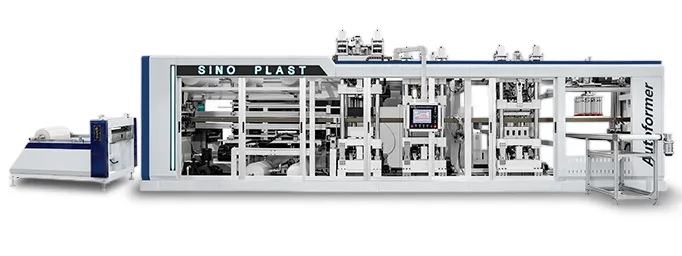
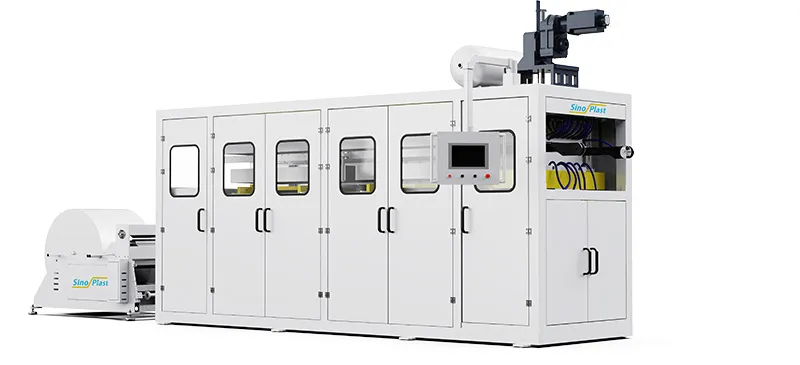
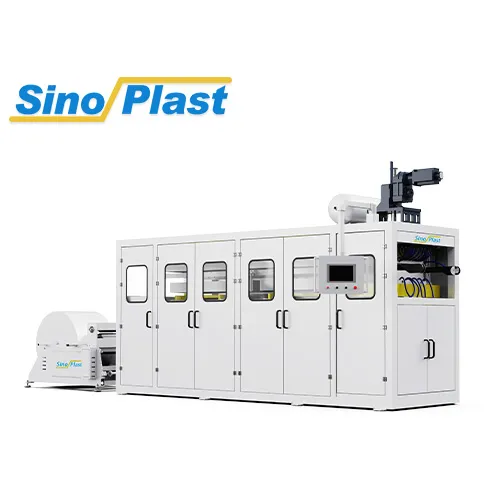
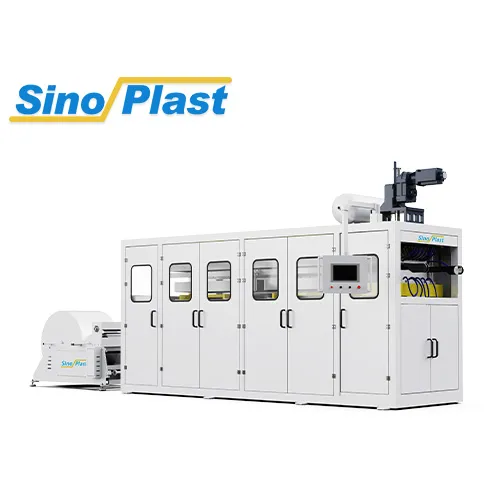
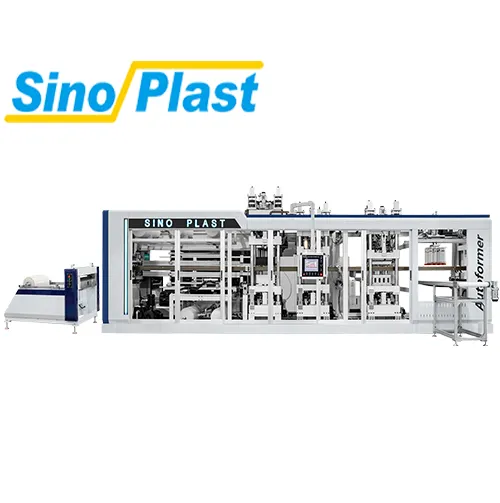
For a closer look at available machine configurations, review the plastic thermoforming machine range or compare plastic cup making machine options for cup-specific production.
Space planning affects material flow, operator movement, mold storage, and future expansion. A typical plastic cup or thermoforming workshop requires a minimum area of around 200 square meters for the main line, with additional space for raw material, finished goods, and mold storage.
Key layout considerations include:
| Area | Suggested Allocation | Notes |
|---|---|---|
| Main production line | 60–70% of floor | Includes machine, auxiliary, and operator space |
| Raw material storage | 10–15% | Pellets, sheet rolls, packaging |
| Finished product storage | 10–15% | Depends on order pattern |
| Mold storage | 5–10% | Racking and access aisle |
| Maintenance and spare parts | 5% | Tools, spare heaters, switches |
For extrusion-based lines, the PP/PS sheet extruder should be positioned upstream of the thermoformer with adequate space for the sheet to cool and stabilize before forming.

Power supply is one of the most common causes of installation delay. The machine's total connected load, voltage, frequency, and phase must match the factory supply.
Typical requirements:
Buyers should provide the supplier with the local voltage, frequency, and phase before production begins. If special design is required, the price and lead time may differ.
A qualified electrician should verify cable sizing, breaker ratings, and emergency stop circuits before commissioning.
Thermoforming molds generate heat during production. Without adequate cooling, cycle time increases, and product quality may suffer—warping, dimensional variation, or surface defects.
The cooling system typically includes:
Chiller sizing depends on:
In many installations, a water-cooled chiller is more efficient for continuous production, while an air-cooled chiller is simpler to install where water supply is limited. Buyers should confirm the recommended chiller capacity with the machine supplier based on the specific mold and product.
Thermoforming uses positive and negative pressure to form sheet into the mold cavity. Compressed air is therefore a core utility, not an optional one.
A typical compressed air system includes:
| Component | Purpose |
|---|---|
| Air compressor | Generates compressed air |
| Storage tank | Buffers pressure fluctuations |
| Dryer | Removes moisture from air |
| Filters | Removes oil and particles |
| Pressure regulator | Maintains stable working pressure |
Air consumption varies by machine size, forming area, and cycle speed. Buyers should ask the supplier for the estimated air consumption at the intended production rate, then select the compressor and tank accordingly.
Common planning mistakes include:
A leak audit after commissioning can help maintain stable pressure and reduce energy waste.
The thermoforming process generates heat from the heating zones. Workshop temperature and humidity affect both machine performance and operator comfort.
Considerations:
For food-contact production, the workshop should support hygiene practices, including cleanable surfaces and controlled access.
Installation quality affects machine accuracy, noise, and service life.
Foundation and floor:
Installation sequence:
Commissioning checklist:
Safety planning should start before installation, not after.
Key areas:
For export markets, CE marking and relevant electrical standards may apply. Buyers should confirm the required certifications with the supplier before ordering.
A typical timeline from contract to mass production:
| Phase | Duration | Key Activities |
|---|---|---|
| Contract and design | 1–2 weeks | Confirm specs, molds, layout |
| Production | 4–8 weeks | Machine build, mold manufacturing |
| Factory test | 1 week | Trial run, sample approval |
| Shipping | 2–4 weeks | Depends on destination |
| Site preparation | Parallel | Power, water, air, floor |
| Installation | 1–2 weeks | Positioning, connection, leveling |
| Commissioning | 1 week | Trial production, parameter setting |
| Training | 3–5 days | Operator and maintenance training |
| Ramp-up | 2–4 weeks | Yield improvement, stable production |
Budget items to include:
Buyers should request a detailed quotation that separates machine, molds, and auxiliary equipment so that the total project cost is clear.
When comparing suppliers, look beyond the machine price.
| Evaluation Area | Questions to Ask |
|---|---|
| Technical capability | Can they match machine capacity to your product? |
| Mold experience | Do they have proven molds for your product shape? |
| Installation support | Do they send engineers? What is included? |
| Training | What training is provided and for how long? |
| Warranty | What is covered and for how long? |
| Spare parts | Are critical parts available after warranty? |
| Response time | How quickly do they respond to technical issues? |
| References | Can they provide references from similar projects? |
Contract points to confirm:
A typical plastic cup or thermoforming line requires around 200 square meters for the main production area, plus additional space for raw material, finished goods, and mold storage. The exact requirement depends on machine size, auxiliary equipment, and workflow.
The main utilities are electricity (three-phase, typically 380V/50Hz), cooling water (chiller and mold circuit), and compressed air (compressor, tank, dryer, filters). Requirements vary by machine model and production rate.
Many configurations use three-phase 380V/50Hz. Other voltages can be designed on request. Buyers should confirm the local supply and any need for a voltage stabilizer before ordering.
Air consumption depends on machine size and cycle speed. Ask the supplier for the estimated consumption at your intended production rate, then size the compressor and tank with some margin for peak demand. A dryer and filters are also recommended.
Chiller capacity depends on the number of molds, cycle time, material, and ambient temperature. The machine supplier can recommend a suitable capacity based on your specific mold and product.
Installation typically takes one to two weeks, followed by about one week of commissioning and trial production. Training usually takes three to five days. The exact schedule depends on site readiness and machine configuration.
Yes. Sinoplast provides installation and training support. The scope and terms should be confirmed in the contract.
ROI depends on machine output, product mix, material cost, labor, energy, and local selling price. Buyers should build a simple model using confirmed output data, local utility costs, and target selling price. The supplier can provide output data for the specific configuration.
Planning a plastic thermoforming line requires attention to layout, power, cooling, compressed air, installation, and supplier support—not just machine price. The most common delays come from incomplete utility planning and unclear scope of supply. Buyers should confirm voltage, water, air, and space requirements before the machine is built, and request a detailed quotation that separates machine, molds, and auxiliary equipment.
For technical confirmation, review the available plastic thermoforming machine configurations or discuss your production requirements with the Sinoplast engineering team through Contact Us.
Prev:
null
We are a professional plastic machinery provider in China.