
 Oct 30,2026
Food-contact thermoforming requires more than selecting a material that forms well. The material must comply with the regulations of every market where the finished product will be sold, and the production process must be documented to support that compliance.
This guide covers the main regulatory frameworks, material selection criteria, specific requirements for rPET and PLA, the sheet extrusion and thermoforming process window, and the documentation buyers should prepare before production begins.
Thermoformed food packaging is regulated differently in each major market. Understanding which framework applies to your destination market is the first step in material selection.
In the United States, food-contact materials are regulated under the Federal Food, Drug, and Cosmetic Act. FDA 21 CFR 177 covers indirect food additives for polymers, including polypropylene, polyethylene terephthalate, polystyrene, and related materials. A material may be used if it complies with the applicable sections of 21 CFR 177, or if it is covered by an effective Food Contact Notification (FCN) or prior sanctioned use. Buyers should request a Letter of Conformance from the material supplier, referencing the specific 21 CFR section that applies to the resin or sheet grade.
In the European Union, plastic food-contact materials are regulated under Commission Regulation (EU) No 10/2011. The regulation establishes a Union List of authorized substances, an overall migration limit (OML) of 10 mg/dm² of food-contact surface area, and specific migration limits (SML) for individual substances. Materials must be accompanied by a written Declaration of Conformity (DoC) in business-to-business trade, with supporting documentation available for inspection. The DoC must reference the applicable regulation and the conditions of use.
The EU Packaging and Packaging Waste Regulation (PPWR, Regulation 2025/40) entered into force in February 2025 and adds packaging-specific requirements on top of food-contact rules. Key provisions include recycled content targets for plastic packaging from 2030, a ban on PFAS in food-contact packaging, and mandatory conformity assessment with technical documentation. Extended Producer Responsibility (EPR) schemes also apply at member-state level, affecting packaging fees and reporting obligations.
REACH (Registration, Evaluation, Authorisation and Restriction of Chemicals) applies to substances used in manufacturing, including those that may be present in food-contact materials. RoHS (Restriction of Hazardous Substances) applies primarily to electrical and electronic equipment, but can be relevant for machine components that come into contact with the product. Buyers should confirm that the material and any additives are not restricted under REACH or RoHS for the intended application.
| Market | Primary Regulation | Key Requirement |
|---|---|---|
| United States | FDA 21 CFR 177 | Materials must comply with applicable sections; Letter of Conformance may be requested |
| European Union | EU 10/2011 | Union List of authorized substances; OML 10 mg/dm²; SML for restricted substances; DoC required in B2B trade |
| European Union (packaging) | EU PPWR (Regulation 2025/40) | Recycled content targets from 2030; PFAS ban in food-contact packaging; conformity assessment and technical documentation |
| China | GB 4806.7 | Total migration limit 10 mg/dm²; specific migration requirements for heavy metals and other substances |
For buyers exporting to multiple markets, the most restrictive applicable requirement typically determines the material and testing strategy.
The following table summarizes key characteristics for thermoforming material selection. Actual performance depends on sheet thickness, mold design, and processing conditions.
| Material | Heat Resistance | Clarity | Recyclability | Typical Food-Contact Applications |
|---|---|---|---|---|
| PP | Good (up to ~100°C) | Moderate | Widely recycled | Lunch boxes, trays, cups, lids |
| PET | Moderate (~70°C) | High | Widely recycled | Cold cups, fruit boxes, trays |
| PS | Moderate | High | Limited recycling infrastructure | Cups, lids, trays |
| rPET | Similar to virgin PET | Depends on quality | Supports recycled content targets | Trays, containers (not for microwave/oven use) |
| PLA | Lower (~50–60°C) | High | Industrially compostable | Cold food containers, cups |
| Parameter | PP | PET | PS | PLA |
|---|---|---|---|---|
| Sheet heating temperature | Higher than PET or PS | Moderate; moisture-sensitive | Lower than PP | 80–110°C typical, some grades higher |
| Drying requirement | Minimal | Required before forming | Minimal | May require pre-drying |
| Mold temperature | Moderate | Moderate | Moderate | Controlled for dimensional stability |
| Typical cycle speed | Slower than PET | Faster at equal thickness | Moderate | Slower than PET |
This comparison is a planning reference. Actual process windows depend on sheet grade, thickness, mold design, and machine configuration. Buyers should confirm recommended parameters with the material supplier and the machine builder for each specific product.
For material-specific comparisons at the product level, the existing articles on PET vs PS vs PP: material selection for cup production and PP vs PS vs PLA: which material should be chosen for plastic cups cover the performance trade-offs in more detail.
Recycled PET (rPET) is increasingly important for food packaging as recycled content targets come into force. However, not all rPET is suitable for food-contact applications.
| Parameter | Virgin PET | rPET |
|---|---|---|
| Feedstock | Petrochemical origin | Post-consumer recycled |
| Decontamination | Not required | Validated process required |
| IV | Consistent, specified by grade | May vary by source and process |
| Drying | Required | Required; conditions may differ |
| Migration testing | Standard testing for the grade | Additional testing to confirm decontamination |
| End-use restrictions | Depends on grade | Thermoformed rPET trays not intended for microwave or oven use |
Migration testing is required to confirm compliance with applicable limits. For rPET, the test scope typically includes overall migration and specific migration for substances that may be present from previous use or the recycling process. Sensory testing (odor and taste) is also relevant for food-contact applications, because recycled material may carry residual odors even when chemical migration is within limits.
Buyers should request migration test reports from the rPET supplier and confirm that the decontamination process has been evaluated for food-contact use. For sheet extrusion lines producing rPET sheet, the extrusion system must be configured to handle the specific drying and decontamination requirements. Review the available PP/PS sheet extruder configurations and discuss material compatibility with the Sinoplast team.

PLA (polylactic acid) offers a compostable alternative for cold food packaging. However, its processing window differs significantly from conventional thermoplastics.
Compostability claims require certification according to recognized standards, such as EN 13432 in Europe or ASTM D6400 in the United States. Buyers should confirm that the specific PLA grade and any additives meet the food-contact regulations of the destination market and that the compostability certification is valid for the intended disposal environment. Industrial composting facilities are not universally available, so end-of-life claims should be made carefully.
For food-contact applications, the PLA grade must comply with applicable migration requirements. Buyers should request a Declaration of Conformity or equivalent documentation from the material supplier.
The sheet extrusion process directly affects the quality and compliance of the final thermoformed product. Key parameters include:
PET and PLA are both moisture-sensitive. During extrusion and thermoforming, moisture can cause hydrolysis, reducing molecular weight and producing surface defects such as splay, bubbles, or haze. The effect is more pronounced at higher temperatures and longer residence times.
Practical steps:
Sheet thickness tolerance affects wall thickness distribution in the formed product. If sheet thickness varies significantly across the width or along the length, the process must be adjusted to accommodate the thickest section, which can cause over-forming or thinning in other areas. Buyers should confirm sheet thickness tolerance with the extruder or sheet supplier and verify incoming sheet quality against the specification.
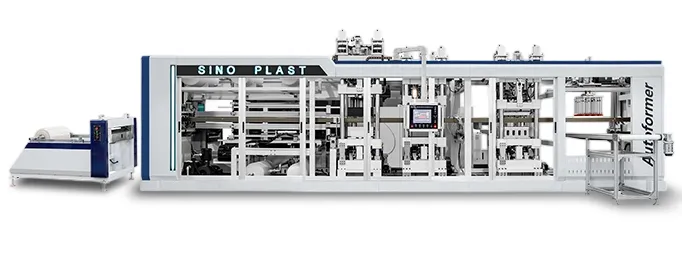
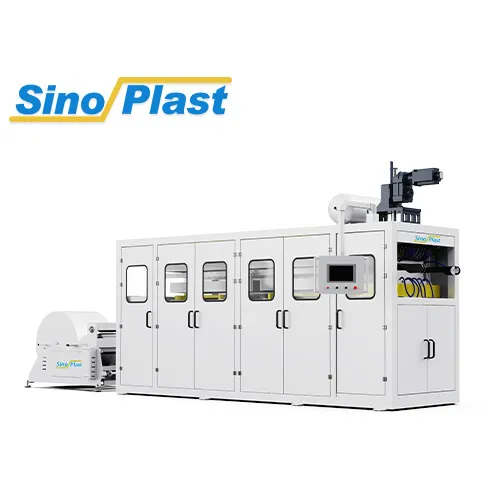
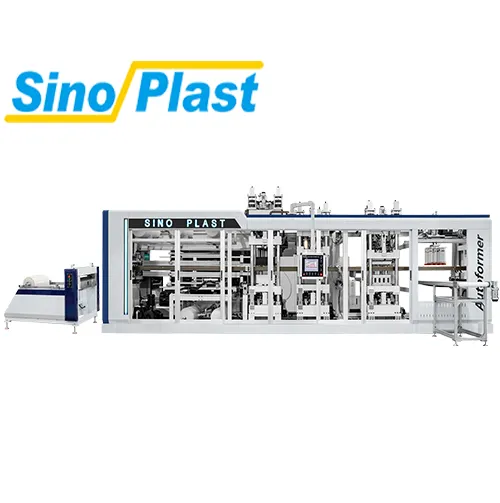
For lines where sheet extrusion and thermoforming are integrated, the extruder and thermoformer must be matched in capacity and process window. The plastic thermoforming machine and plastic cup making machine pages show available configurations; the Sinoplast team can confirm compatibility with specific materials.
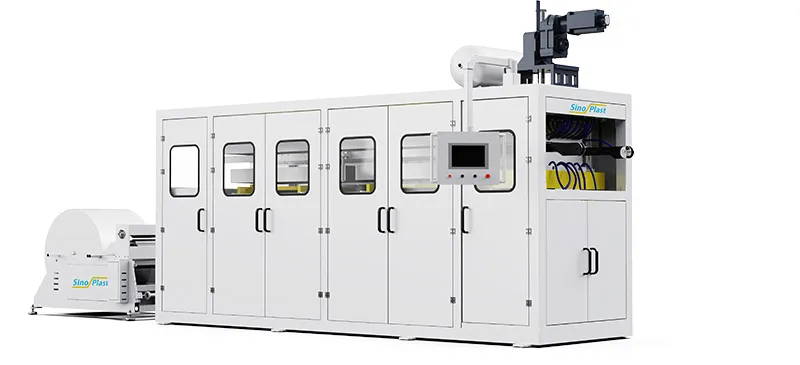
Buyers should request and verify the following documents before production begins.
| Document | Purpose | When to Request |
|---|---|---|
| Declaration of Conformity | Confirms compliance with applicable regulation | Before production, for each material grade |
| Migration test report | Demonstrates compliance with OML and SML | Before production, for each material grade |
| Certificate of Analysis (CoA) | Confirms batch-specific properties | With each shipment |
| Safety Data Sheet (SDS) | Provides hazard and handling information | Before production |
| Food-contact statement | Confirms suitability for food-contact use | Before production |
| Traceability records | Links finished product to resin batch | On request, for compliance audits |
The compliance documentation should be maintained and available for inspection. Under EU rules, manufacturers, distributors, and importers of materials such as thermoforming sheets are subject to supply chain documentation requirements.
Download the compliance document checklist used in this guide to build your own file for each material grade and destination market. For material test samples, request them through the contact form or discuss your specific grade with the Sinoplast engineering team.
Machine design and supplier practices affect compliance capability.
When evaluating a supplier, ask:
Sinoplast provides technical support for material selection and parameter optimization. For quality-related information, review the quality page. For service and training support, see the service page.
Sustainability requirements are increasingly influencing material selection and production planning.
| Factor | Virgin PP | Virgin PET | rPET | PLA |
|---|---|---|---|---|
| Material cost | Generally lower | Moderate | Premium depending on market | Premium |
| Certification cost | Not applicable | Not applicable | Recycled content certification may add cost | Compostability certification adds cost |
| Testing cost | Standard | Standard | Additional migration testing | Additional migration and compostability testing |
| Processing cost | Baseline | Baseline | May require adjusted parameters | May require adjusted parameters and slower cycle |
Buyers should factor compliance costs into the total project budget and consider how material choices affect long-term regulatory risk.
Yes, provided the rPET is produced from an approved feedstock and processed through a validated decontamination system that has been evaluated for food-contact safety. Migration testing is required to confirm compliance with applicable limits. Buyers should request migration test reports and confirm that the decontamination process has been evaluated by a recognized body.
PLA can generally be processed on thermoforming machines, but the temperature window differs from PP or PET. Sheet heating is typically in the range of 80–110°C, with some grades requiring higher temperatures. Mold temperature and cooling also need adjustment. Buyers should confirm the specific grade and processing parameters with the material supplier and machine builder.
PPWR introduces recycled content targets starting in 2030, a PFAS ban in food-contact packaging, and mandatory conformity assessment with technical documentation. Producers should begin planning for recycled content incorporation, documentation systems, and potential changes to material selection.
At minimum, overall migration testing is required under EU 10/2011, with specific migration testing for substances that have restrictions. For US market compliance, testing should demonstrate that the material meets applicable 21 CFR requirements. The specific test scope depends on the material, intended use conditions, and destination market.
A Declaration of Conformity is required in the EU supply chain. Material suppliers should provide a CoA for each batch. Migration test reports support the DoC. For US shipments, a 21 CFR Letter of Conformance may be requested. The specific documentation depends on the destination market and the material used.
rPET may require different drying conditions and extrusion temperatures depending on the IV and contamination level. The forming window may also shift slightly. The key difference is the decontamination requirement — rPET must come from a validated process, not just conventional extrusion. Buyers should verify the processing parameters with the material supplier for each specific grade.
Food-contact compliance for thermoformed packaging requires attention to material selection, regulatory requirements, processing parameters, and documentation. The most common issues arise from unclear material specifications, missing DoC or migration test reports, and processing conditions that affect the final product's compliance. Buyers should confirm the applicable regulations for each destination market, verify material grades against positive lists, and build a document file before production begins.
For material-specific processing discussions, review the PP/PS sheet extruder configurations or discuss your compliance requirements with the Sinoplast team through Contact Us. To request a material test sample or the compliance document checklist, contact the engineering team directly or reach out on WhatsApp for a quick technical discussion.
Oct 30,2026
We are a professional plastic machinery provider in China.