
 Aug 27,2026
If you run a plastic thermoforming line, you know the feeling: a production run finishes, the machine stops, and the clock starts ticking. The mold comes out, the next mold goes in, heaters warm up, parameters are adjusted, test runs are made—and before you know it, an hour or more has vanished. Multiply that by several changeovers per day, and you're looking at hundreds of lost production hours every year.
This guide examines the real cost of mold changeover downtime, identifies the key factors that determine whether a changeover takes 20 minutes or two hours, and provides a practical framework for evaluating equipment and workflow improvements. Whether you're running a single machine or managing a multi-line facility, the goal is the same: more time forming products, less time waiting.
Changeover downtime isn't just about the minutes the machine isn't running. It's about the cumulative effect on your entire operation.
Consider a typical scenario: a thermoforming line running PET at 35 cycles per minute, producing 35 to 40 parts per cycle. Every minute of downtime represents 1,225 to 1,400 parts that aren't being made. A one-hour changeover means 73,500 to 84,000 lost parts. If you're running two changeovers per day, that's nearly 150,000 parts lost daily.
But the cost goes beyond lost output:
Material waste from test runs and adjustment cycles
Labor cost for the operators and technicians involved in the changeover
Energy consumption during warm-up and stabilization periods
Schedule disruptions that cascade through downstream operations
Increased wear on molds and machine components from frequent handling
For manufacturers producing a wide variety of cup sizes, container shapes, or lid designs, frequent changeovers are simply part of the business. The question isn't whether you'll do changeovers—it's how efficiently you can execute them.
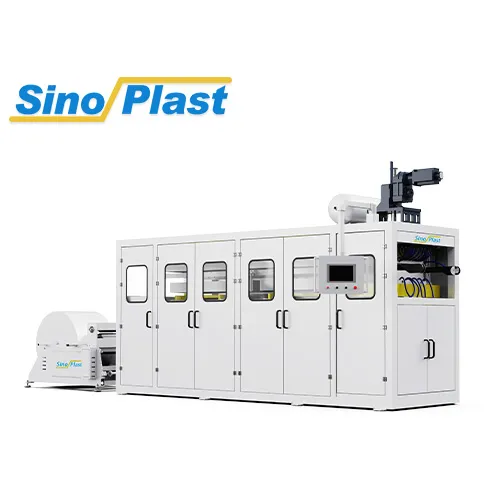
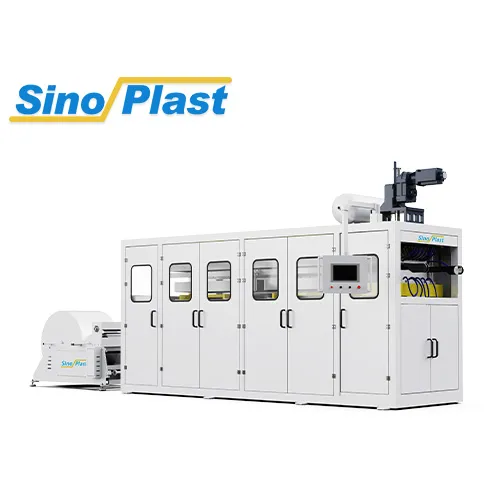
Understanding your machine's capabilities is the first step. Explore Sinoplast's plastic thermoforming machine series to see how different configurations handle changeover requirements.
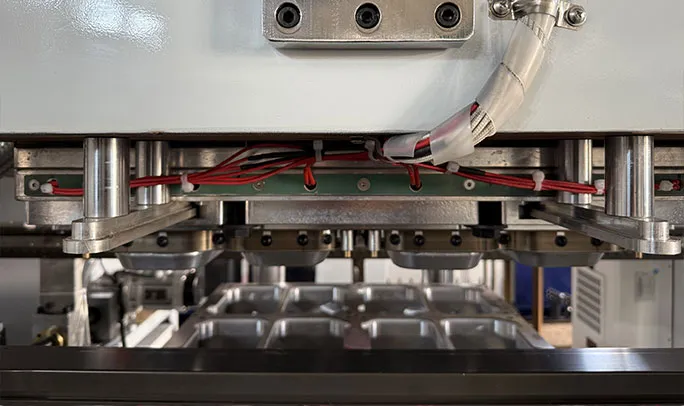
Not all changeovers are created equal. The time required to switch from one mold to another depends on several interconnected factors. Understanding these variables helps you identify where your biggest opportunities for improvement lie.
This is perhaps the most fundamental decision affecting changeover flexibility.
Single-station machines perform all operations—heating, forming, punching, and stacking—at a single station. Changeovers are typically faster because there's only one station to configure. As noted in industry discussions, single-station machines offer simplicity and fast changeovers.
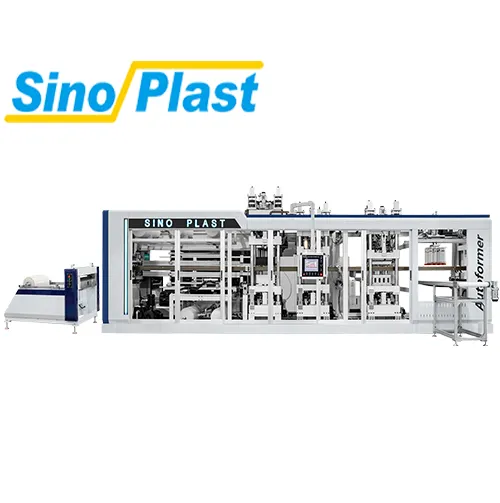
Multi-station machines, by contrast, separate these functions across multiple stations. A three-station or four-station plastic thermoforming machine might have dedicated forming, punching, and stacking stations. While this arrangement delivers higher throughput during production runs, changeovers can be more complex because multiple stations need to be synchronized and adjusted.
The trade-off is clear: single-station for flexibility and fast changeovers, multi-station for sustained high-volume output.
Not all molds are equally changeover-friendly. Factors that impact changeover time include:
Clamping system: Quick-release clamps vs bolted connections
Alignment features: Dowel pins, guides, and registration marks that speed positioning
Heating integration: Whether heating elements are part of the mold or the machine
Weight and handling: Heavier molds require lifting equipment and more careful positioning
Standardizing mold designs across your product line can dramatically reduce changeover complexity. When all molds share common interface dimensions and connection points, the learning curve for each new changeover shrinks.
One of the most time-consuming aspects of changeover is dialing in the right parameters for each mold: temperature settings, forming depth, cycle timing, and more.
Modern thermoforming machines with parameter storage capabilities can save this information after initial setup and debugging. For future runs, operators can simply recall the stored parameters and press start. This eliminates the trial-and-error phase that often consumes the first 15 to 20 minutes of a changeover.
Changeovers don't happen in isolation. The sheet feeding system, trim press, stacking equipment, and downstream packaging lines all need to be adjusted or reconfigured. If your auxiliary equipment isn't coordinated with the main machine, changeover time multiplies.
As one industry guide notes, air compressors, chillers, and storage tanks are often afterthoughts—but undersized auxiliaries can stop your thermoforming line entirely. The same principle applies to changeovers: if your auxiliary equipment can't keep pace with the main machine's changeover, you're not saving time. For a deeper look at how different machine configurations balance changeover speed against production volume, see Sinoplast's plastic cup machines and thermoforming machines application center for real-world production scenarios.
| Feature | Single-Station | Three-Station | Four-Station |
|---|---|---|---|
| Changeover speed | Fastest | Moderate | Most complex |
| Production throughput | Lower | High | Highest |
| Parameter storage | Available | Available | Available |
| Best use case | Multiple small runs, frequent product changes | Medium-volume production with some variety | High-volume, long runs with minimal changeovers |
| Typical forming area | Varies | Up to 780×540mm | Up to 780×650mm |
When to choose each approach:
Frequent changeovers, high product variety: A single-station machine or a three-station machine with strong parameter storage capabilities offers the best balance.
High volume, limited changeovers: A four-station machine maximizes throughput during production runs, with changeover time being a smaller percentage of overall operation.
Mixed production: Some manufacturers operate both types—single-station for short runs and R&D, multi-station for volume production.
Based on the factors above, here's a step-by-step approach to reducing changeover downtime in your facility:
Time each changeover from the last good part of the previous run to the first good part of the next run. Break it down into segments: machine stop, mold removal, mold installation, warm-up, parameter adjustment, test run, and production start. This baseline data reveals where your biggest time sinks are.
Does your machine store mold parameters? Can operators recall them with a single command? If not, this is a high-impact upgrade opportunity. Does the machine use quick-change clamping systems? Are mold interfaces standardized?
If you're running 20 different molds, how many unique interface designs do you have? Each unique design adds complexity and time. Work toward a standardized interface across all molds. This may require modifying existing molds or specifying standard interfaces for new molds.
Even the best equipment won't deliver fast changeovers without skilled operators. Develop standardized changeover procedures, document them clearly, and train all operators. Consider creating quick-reference guides for each mold with optimal parameters and changeover tips.
If your current machine lacks parameter storage, uses slow clamping systems, or has other changeover-limiting features, evaluate whether upgrading or replacing the machine makes economic sense. Compare the cost of downtime against the cost of a machine with better changeover capabilities. For manufacturers running high-volume production with PP, PS, or PE materials, Sinoplast's PP/PS sheet extruder offers insights into upstream equipment that can complement your thermoforming line.

Consider two common production scenarios:
This manufacturer produces cups, lids, and containers for multiple food brands. They might run 500,000 lids for one customer, then switch to 200,000 cups for another, then produce 100,000 specialty containers. Changeovers happen multiple times per day, often with different materials (PET for cups, PP for lids).
For this manufacturer, changeover speed is a primary competitive advantage. Fast changeovers mean they can accept more orders, serve more customers, and keep machines running at higher overall utilization. Parameter storage and quick-change tooling are essential.
This manufacturer produces one primary product—say, a specific cup size—in massive volumes. Changeovers might happen once per week or even less frequently. For them, changeover speed is less critical than throughput during production runs. A four-station machine with a larger forming area (up to 780×650mm) allows more cavities per cycle and higher output.
The right approach depends entirely on your production profile.
Reducing mold changeover downtime isn't about a single silver-bullet solution. It's about understanding your specific production profile, identifying the bottlenecks in your current process, and making targeted improvements—whether that's upgrading to a machine with parameter storage, standardizing your mold interfaces, or investing in operator training.
Once you've clarified these key decision factors—your typical changeover frequency, product variety, and volume requirements—comparing the specific capabilities of available equipment becomes the next logical step. You can review Sinoplast's thermoforming machine options for different production scenarios, or explore how the PP/PS sheet extruder integrates with your downstream forming operations. For a deeper understanding of material selection and its impact on production efficiency, see Sinoplast's industry news section for guides on PET vs PP thermoforming and other technical topics.
We are a professional plastic machinery provider in China.