
 Dec 17,2025
Are you looking for a detailed, safe, and actionable plastic thermoforming machine operation guide? Whether you’re a beginner operator, factory technician, or small business owner aiming to optimize plastic processing workflows, this tutorial covers everything you need to master standard thermoforming processes (vacuum forming, pressure forming, plug-assist forming). We’ll also break down why full-automatic thermoforming machines have become a game-changer for businesses seeking efficiency, consistency, and scalability—critical for staying competitive in industries like packaging, automotive, medical devices, and consumer goods.
Proper pre-operation checks are the foundation of safe and efficient thermoforming. Neglecting these steps can lead to equipment damage, product defects, or even workplace injuries—risks that cost businesses time and money. Below is a foolproof checklist tailored for both manual/semi-automatic and automatic setups.
•Wear mandatory PPE (Personal Protective Equipment): Heat-resistant gloves, safety goggles, non-slip work shoes, and a dust mask (critical for processing materials that may release fumes when heated).
•Ensure the workspace is well-ventilated (install exhaust fans if needed) and free of flammable materials (e.g., oil rags, chemical solvents) to prevent fire hazards.
•Locate and test emergency stop buttons (red, easily accessible) to confirm they can halt all machine operations instantly in case of jams or malfunctions.
•Verify that safety guards (for heating elements, moving clamping frames, and mold sections) are intact and securely fastened—never remove guards during operation.
•Hydraulic/pneumatic systems: Check for leaks (oil or air) and ensure pressure levels match the machine’s specifications.
•Heating elements: Inspect quartz tubes or heaters for cracks, burnout, or misalignment—uneven heating is a top cause of defective parts.
•Vacuum pump: Test suction pressure (typically 0.6–0.9 bar for standard machines) and clean filters to avoid clogs that reduce forming efficiency.
•Molds: Ensure molds are clean (free of plastic residue or debris), properly clamped, and aligned with the sheet feeding path. Damaged or misaligned molds lead to wasted materials and rework.
Choosing the right plastic sheet and preparing it correctly directly impacts product quality. Common materials include PET (ideal for food packaging), PP (durable for industrial parts), PVC (cost-effective for consumer goods), and ABS (rigid for automotive components).
•Cut sheets to size: Slightly larger than the mold cavity to prevent wrinkles or incomplete forming.
•Dry moisture-sensitive materials: PET, ABS, and some PP sheets absorb moisture, which causes bubbles in finished parts. Dry at 60–80°C for 2–4 hours before use.
•Check sheet thickness: 0.1–10 mm (depending on machine capacity)—thicker sheets require longer heating and higher vacuum pressure.
Below is the standard operation workflow for most thermoforming machines. Note that manual/semi-automatic machines require more hands-on input (e.g., manual sheet feeding, trimming), while full-automatic models automate these steps—we’ll highlight these differences later to show how automation boosts efficiency.
•Turn on the main power switch and activate the control panel (PLC or touchscreen—standard on modern machines).
•Set heating temperatures based on the plastic material (refer to the table below for industry-standard settings). Overheating can cause material degradation, while underheating leads to incomplete forming.
•Allow the machine to warm up for 15–30 minutes until the heating zone reaches the set temperature (monitor via the control panel’s digital display).
Common Plastic Material Heating Temperatures
Plastic MaterialHeating Temperature Range (°C)Key Notes for OperationPVC120–160Low shrinkage; avoid overheating (may release toxic fumes)PET/PETG150–180High-temperature resistance; requires uniform heatingPP140–170Flexible; prone to warping if heated unevenlyABS160–190Rigid; needs slow heating to prevent stress cracks
Mold temperature: Set to 20–60°C using water or air cooling. Cooler molds speed up solidification; warmer molds improve material flow for complex shapes.
Sheet clamping pressure: Adjust pneumatic/hydraulic pressure to hold sheets securely without damage (too much = deformation; too little = air leakage).
Forming parameters (adjust based on sheet thickness/mold complexity):
•Vacuum time: 1–5 seconds (thicker sheets need longer to draw air out).
•Pressure time (pressure forming): 2–8 seconds (compressed air pushes sheets into molds for sharp details).
•Cooling time: 5–15 seconds (insufficient cooling = warping).
•Demolding delay: 1–2 seconds (prevents parts from sticking to molds).
•Dry cycle (no sheet): Verify mold clamping, vacuum/pressure systems, and conveyor belts work smoothly. Adjust parameters for misalignment or pressure issues.
•Load sheets: For manual machines, place cut sheets onto the feeding table and align with guides. For automatic machines, load a stack into the automatic feeder (no manual handling needed).
•Heating: The clamping frame moves sheets into the heating zone. Monitor for pliability (slight sagging = ready; avoid overheating).
•Forming: Heated sheets move over molds. Vacuum/pressure activates to shape sheets (plug-assist for deep cavities).
•Cooling & demolding: Cooling systems solidify parts; demolding mechanisms (ejector pins/air blasts) release parts.
•Trimming: Manual machines require hand trimming with routers/die cutters. Automatic machines integrate in-line trimmers for seamless processing.
•Finish the current cycle, stop feeding, and remove remaining sheets.
•Turn off heating elements and let the machine cool (15–30 minutes); keep cooling systems running to protect molds.
•Clean molds, heating elements, and clamping frames (use non-abrasive tools/solvents).
•Check fluid levels (hydraulic oil, lubricants) and turn off main power.
Even with proper setup, issues can arise. Use this checklist to diagnose and fix problems quickly—saving time and reducing waste.
|
Common Issue |
Root Cause |
Solution |
|---|---|---|
|
Bubbles in parts |
Moisture in sheets; overheating |
Dry sheets before use; lower heating temperature/time |
|
Wrinkles on surfaces |
Sheet misalignment; insufficient clamping pressure |
Realign sheets; increase clamping pressure |
|
Incomplete forming |
Low vacuum/pressure; insufficient heating |
Check vacuum pump/air compressor; increase heating time |
|
Warping after demolding |
Insufficient cooling; high mold temperature |
Extend cooling time; lower mold temperature |
|
Part sticking to mold |
Dirty mold; short demolding delay |
Clean mold; increase demolding delay; use mold release agent (sparingly) |
Manual and semi-automatic thermoforming machines work for small-batch production, but they come with limitations: high labor costs, inconsistent output, and slow cycle times. For businesses looking to scale, reduce waste, and improve safety, full-automatic thermoforming machines address these pain points while delivering long-term ROI. Here are their key advantages:
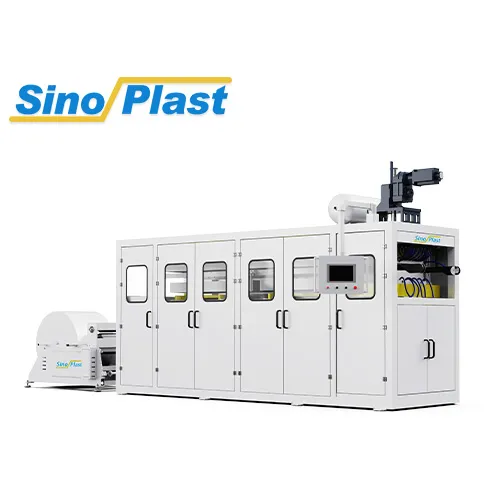
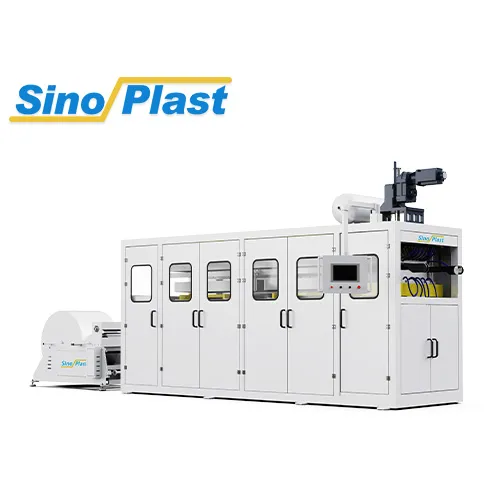
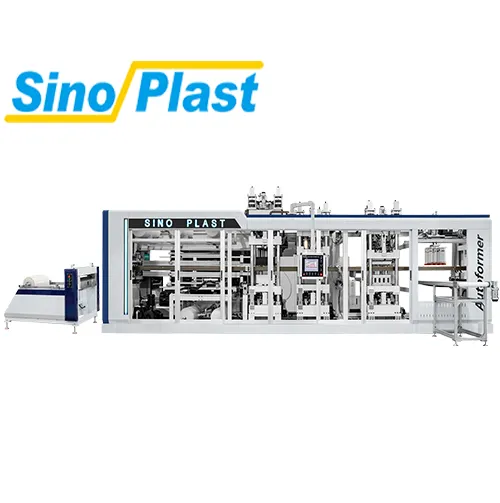
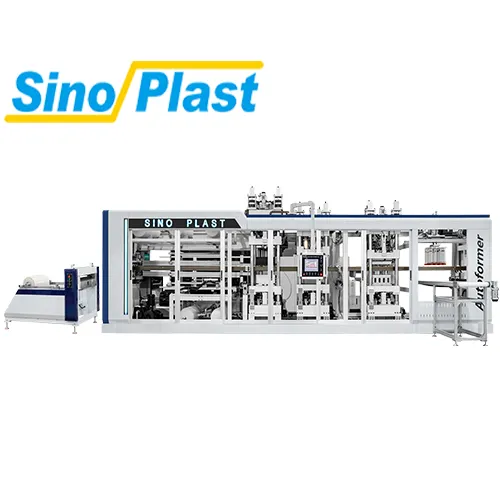
Full-automatic machines integrate automatic sheet feeding, heating, forming, cooling, demolding, and trimming into a single seamless workflow. They eliminate manual handling delays, with cycle times up to 50% faster than semi-automatic models. For example, a standard automatic machine can produce 200–500 parts per hour (depending on part size), compared to 50–150 parts per hour with manual operation. This means you can fulfill large orders faster and take on more business.
Human error is a major cause of defective parts and material waste. Full-automatic machines use PLC control systems to maintain precise parameters (temperature, pressure, cooling time) across every cycle. This ensures uniform part thickness, no wrinkles or bubbles, and consistent dimensions—reducing waste rates from 15–20% (manual) to 3–5% (automatic). Less waste means lower material costs and higher profit margins.
A single operator can monitor 2–3 full-automatic machines, compared to 1 operator per semi-automatic machine. This cuts labor costs by 50–70% over time. Additionally, automatic machines minimize human contact with hot surfaces and moving parts, reducing the risk of burns or injuries. Safety features like automatic emergency stops and guard interlocks further protect your team.
Modern full-automatic thermoforming machines handle a wide range of materials (PET, PP, PVC, ABS) and part sizes (from small food containers to large automotive components). They support vacuum forming, pressure forming, and plug-assist forming, making them ideal for industries like food packaging, medical devices (e.g., plastic trays), automotive (e.g., interior panels), and consumer goods (e.g., toy parts). Many models also offer quick mold changeovers (10–15 minutes) for flexible production.
Full-automatic machines feature user-friendly touchscreen interfaces—operators can set parameters, monitor production, and troubleshoot issues with minimal training. Most models also include self-diagnostic functions that alert operators to problems (e.g., low vacuum pressure, heater failures) before they cause downtime. Routine maintenance is simple, with accessible components and clear user manuals.
•Always follow the machine’s user manual for model-specific parameters .
•Train operators on emergency procedures and regular maintenance to extend machine lifespan.
•For high-volume production, invest in full-automatic machines with automatic material handling and in-line quality control.
•Choose a reliable supplier that offers after-sales support to minimize downtime.
By following this operation guide and understanding the benefits of full-automatic thermoforming machines, you can optimize your plastic processing workflow, reduce costs, and deliver high-quality products consistently. Whether you’re a small business owner or a factory manager, the right equipment and processes are key to staying ahead in the competitive thermoforming industry.
We are a professional plastic machinery provider in China.