
 Apr 23,2026
Let‘s be honest. Most buyers approach the search for a cup-forming line with a spreadsheet full of cycle rates and a vague hope that everything will just “fit together.“ They compare price tags, glance at forming area specs, and call it a day. Three months later, they‘re stuck with a machine that churns out lids with inconsistent snap‑fit, warps when running recycled PET, or devours electricity like a hungry beast. The global thermoforming machinery market was valued at roughly USD 1.05 billion in 2025 and is projected to reach USD 1.56 billion by 2035, growing at a CAGR of 4.1%. But here is the uncomfortable truth: a shiny market forecast does not protect you from making a costly mismatch. So, what do you actually need to look for when selecting equipment to turn plastic sheets into thousands of consistent cups and lids? The answer begins with three questions that most suppliers hope you never ask.
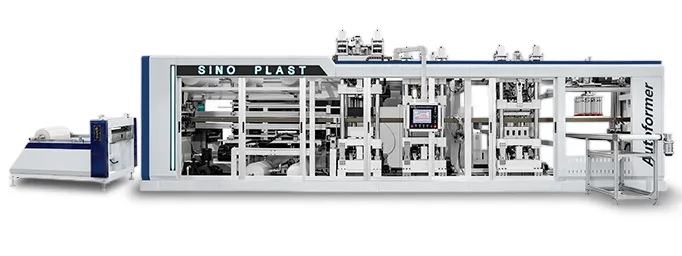
Walk into any packaging trade show, and you will hear the same drumbeat: cycle speed, cycle speed, cycle speed. And yes, speed matters. A fully automatic thermoformer can run 24/7 with minimal human intervention, pushing out tens of thousands of units per shift. But here is the catch that nobody puts in the brochure: high output often comes with hidden trade‑offs in wall‑thickness uniformity and material waste.
I have seen a well‑known franchise chain invest in a blisteringly fast continuous‑feed system, only to discover that the machine could not maintain consistent sheet tension when switching from virgin PET to post‑consumer recycled (PCR) material. The result? Cups with thin spots that cracked under top‑load stress, and a recycling rate that fell far short of their sustainability promises.
The smarter approach is to match forming speed to your product mix. If you run a single cup design for 10 million units a year, high‑speed continuous thermoformer is your friend. But if your operation juggles multiple lid geometries, varying depths, and frequent material changes, a double‑station or batch‑type machine offers better flexibility without sacrificing quality. Speed without precision is just a faster way to produce defects.
Here is a question that exposes inexperienced buyers: “What is your machine‘s preferred processing window for PP versus PET?” If the sales rep hesitates, walk away.
Polypropylene (PP) and polyethylene terephthalate (PET) behave like completely different animals under heat. PP requires a narrower temperature range — too cold and the sheet does not stretch properly; too hot and it degrades into sticky residue that fouls the mould. PET, on the other hand, demands precise cooling rates to prevent crystallisation that turns clear containers cloudy. A versatile thermoforming machine must handle both, with zoned infrared heating and closed‑loop temperature control that adjusts in real time.
And do not overlook the quiet revolution in recycled content. Recent tests at K Show 2025 demonstrated that PET (post‑consumer recycled PET) can deliver the same forming accuracy, stackability, and material distribution as virgin material, all while maintaining an energy input of just 1.17 kWh per 1,000 cups. That is a game‑changer for brands under pressure to hit sustainability targets. But here is the kicker: not every machine can process high percentages of rPET without frequent downtime. The heating profile for recycled material differs slightly due to residual contamination and varying molecular weights. A well‑calibrated system with adaptive heating logic handles this seamlessly. A cheap one does not.
Let us get technical for a moment, because this is where most buyers get blindsided. A cup‘s wall thickness distribution determines everything from top‑load strength (how well it stacks without collapsing) to oxygen permeability (critical for dairy products). The difference between a 0.35 mm wall and a 0.45 mm wall might seem negligible, but it translates directly to material cost, shipping weight, and customer perception of “premium feel.”
The secret lies in the forming station — specifically, the combination of vacuum and pressure forming and the plug assist mechanism. A machine with a well‑designed plug assist (a mechanical plunger that pre‑stretches the heated sheet before vacuum is applied) produces far more uniform walls than a system relying solely on vacuum. For deep‑draw cups (think 95 mm height or more), you absolutely need servo‑driven plug assist with independent speed and depth control.
And do not ignore forming tonnage. If your machine lacks sufficient clamping force, the sheet will pull away from the mould during forming, creating thin spots at the rim — exactly where lids need a consistent sealing surface. Look for a forming station tonnage rated at least 30% above your calculated requirements to account for material variations.
Energy consumption is the silent killer of packaging margins. A typical thermoforming line spends most of its electricity on heating ovens and compressed air systems. In one real‑world case, a disposable packaging plant found that compressors alone consumed about 40% of total site kilowatt‑hours. After optimising heater box usage and installing an intermediate compressor controller, they cut compressor power consumption by 10% — a modest percentage that translated into significant annual savings.
Newer machines are tackling this head‑on. AI‑powered thermoforming solutions now use smart heater mapping to reduce energy consumption per part, with some systems cutting idle consumption dramatically by heating only when and where needed. One manufacturer reported that their redesigned cup‑forming machine can deliver 50% more production with 10% less energy compared to previous generations.
When comparing quotes, ask for kWh per 1,000 parts data. A machine that costs 15% more upfront but uses 20% less electricity will pay for itself within two years at current industrial power rates. Do the math. Do not rely on vague promises.
Here is where the rubber meets the road. Many buyers assume that standard moulds are the safe, low‑risk option. And for basic cups with simple geometry, that is often true. But the moment you need something unique — a raised grip texture, a tamper‑evident lid with a specific snap‑fit, a multi‑compartment container for noodles and sauce — standard moulds become a straightjacket.
Custom‑engineered moulds cost more upfront. There is no way around that. But they deliver three critical advantages that generic tooling cannot match:
First, they allow you to integrate branding directly into the product — debossed logos, micro‑textured surfaces for better grip, even reinforced ribs that eliminate the need for paper sleeves. That is not just aesthetics; it is functional differentiation.
Second, custom moulds optimise material distribution for your exact application. A mould designed specifically for a 16 oz iced coffee cup can reduce wall thickness by 0.05 mm in non‑critical areas while reinforcing the rim and base — cutting material usage by 8–12% without compromising strength. Over millions of units, that is real money.
Third, custom tooling enables faster changeovers. A well‑designed mould system with quick‑release mechanisms and pre‑set forming parameters can reduce downtime between product runs from hours to minutes.
This is precisely where a specialised thermoforming system — one designed from the ground up for cups and lids rather than adapted from general‑purpose equipment — proves its worth. Instead of forcing your product into a generic mould, a tailored solution works backwards from your specific requirements: material type, fill temperature, stacking height, sealing method, and even downstream automation integration.
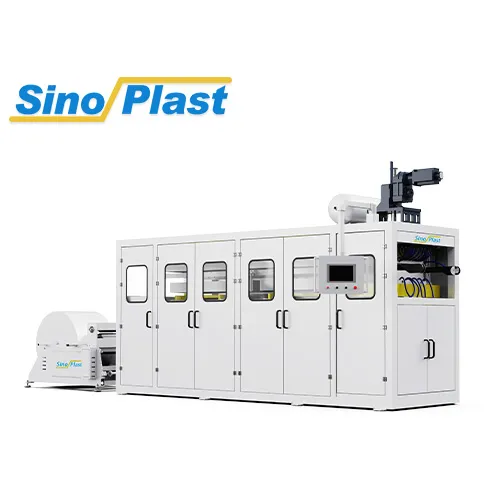
For a closer look at how different equipment configurations translate into real‑world performance, explore the available machine options.
Lids are the neglected stepchild of the packaging world. Everyone obsesses over the cup; nobody thinks about the lid until it fails. And when a lid fails — popping off during delivery, cracking at the sip hole, or refusing to seal properly — the customer blames your brand, not the lid manufacturer.
Lid thermoforming imposes unique demands that cup‑focused machines often overlook. Lids are typically shallower (forming depths under 40 mm) but require extremely precise dimensional tolerances around the rim and sealing flange. A variance of just 0.1 mm can mean the difference between a satisfying snap and a loose fit that leaks.
Look for a forming system that offers independent control of plug assist depth and vacuum timing for each cavity. This allows you to fine‑tune the material stretch for the sealing flange separately from the dome area. And do not underestimate the importance of in‑mould trimming. Lids trimmed after forming often have rough edges that compromise seal integrity. A machine that integrates forming and punching in a single station produces clean, consistent rims every time.
Also, consider multi‑cavity moulds. A mould with 48 cavities running at 30 cycles per minute produces 86,400 lids per hour. But only if the heating system can maintain uniform temperature across all cavities. Uneven heating creates cavity‑to‑cavity variation — some lids perfect, others rejects. Advanced systems use zoned heating with independent control for each area of the sheet, ensuring consistent results regardless of mould size.
The sustainability conversation around disposable packaging has become so noisy that it is hard to separate substance from spin. Here is a reality check: biodegradable PLA sounds great, but it requires different heating profiles and has lower heat resistance than PP or PET. Recycled content reduces virgin material use, but high PCR percentages can increase scrap rates if your machine lacks adaptive process controls.
The most practical path forward is lightweighting — using less material per unit without compromising performance. A well‑calibrated forming line can reduce average wall thickness by 10–15% through optimised material distribution, cutting both cost and environmental footprint simultaneously. And because less material means lower shipping weight, the benefits multiply across your supply chain.
Recent industry data shows that the sustainable plastic packaging market is expected to reach substantial figures, driven by demand for machines capable of utilising recycled materials efficiently. If your thermoforming equipment cannot handle at least 30% PCR content reliably, you are already behind the curve.
By now, you have probably realised that selecting a forming line is not a one‑size‑fits-all exercise. Here is a short checklist to guide your final decision:
1. Define your material matrix. List every plastic type you currently use or plan to use (PET, PP, PS, PLA, rPET). Verify that the thermoforming unit can process all of them without major reconfiguration.
2. Calculate true production needs. Do not just ask for maximum cycle rate. Ask for sustained output over an 8‑hour shift, including time for material changes, cleaning, and maintenance.
3. Request a sample run. Any serious supplier should be willing to run your material through their equipment using your mould design. Inspect the resulting cups and lids for wall thickness consistency, rim finish, and dimensional accuracy.
4. Audit energy data. Request kWh per 1,000 parts under typical operating conditions. Compare this across suppliers.
5. Evaluate after‑sales support. What is the typical response time for spare parts? Is remote diagnostics available? Does the supplier offer operator training? These factors often matter more than the initial price.
A thermoforming machine for cups and lids is a long‑term investment that shapes not just plastic sheets but your entire packaging operation. The wrong choice leads to endless firefighting — inconsistent quality, unexpected downtime, and hidden costs that eat away at margins. The right choice becomes a competitive advantage: faster changeovers, lower scrap rates, and the ability to pivot when market demands shift.
For a complete overview of equipment specifications and customisation possibilities, browse the full product range.
We are a professional plastic machinery provider in China.